SELECTRESS KHAN
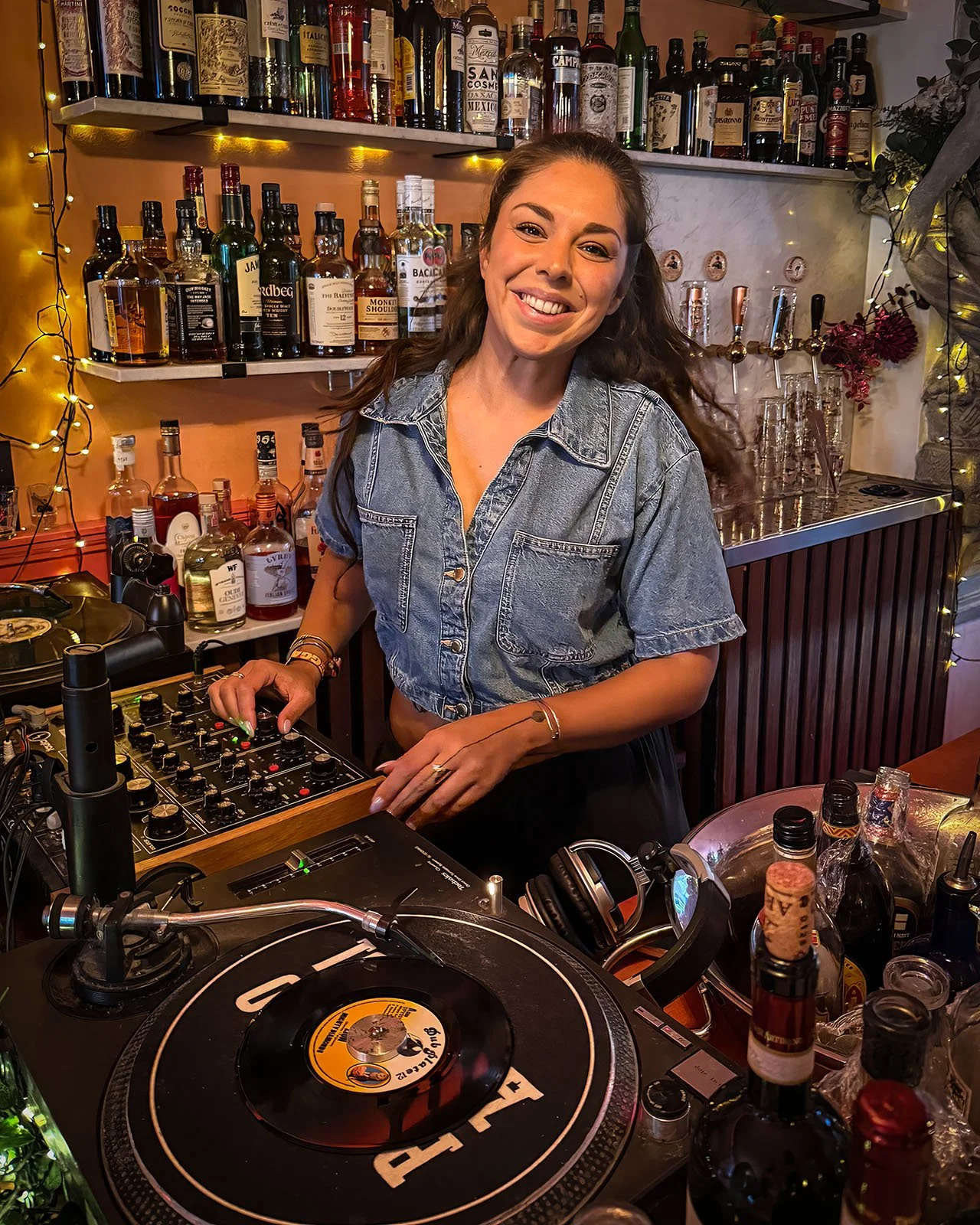
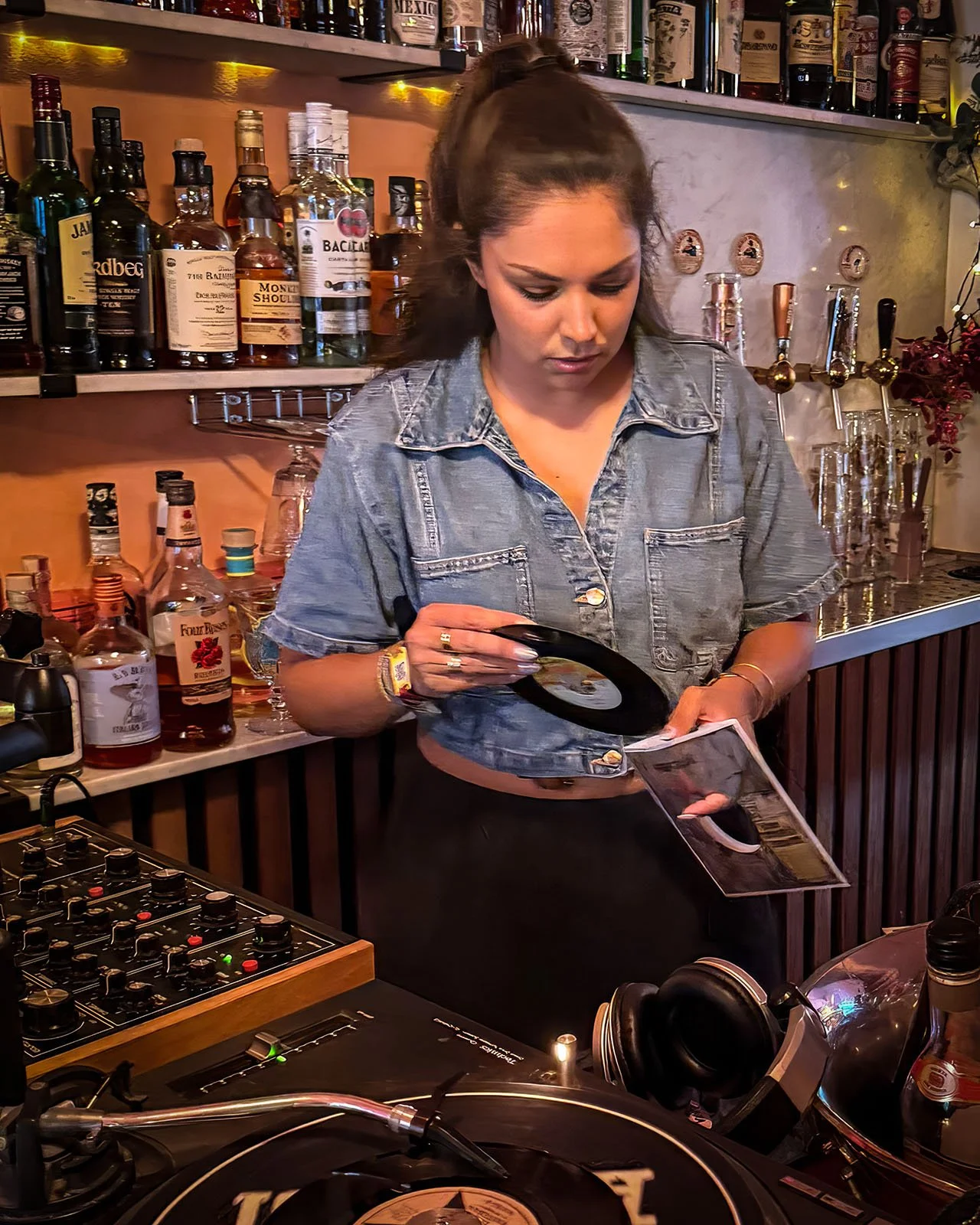
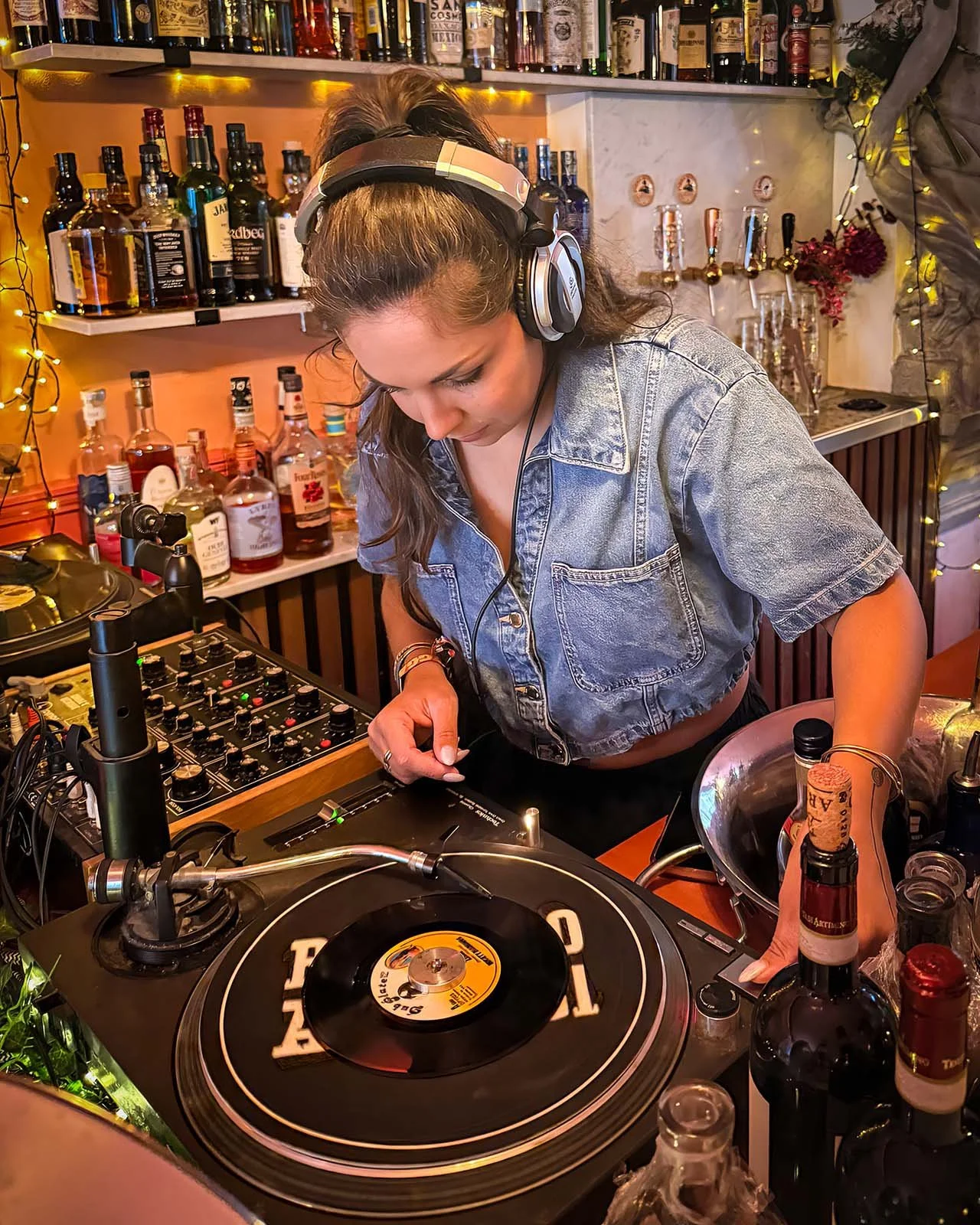
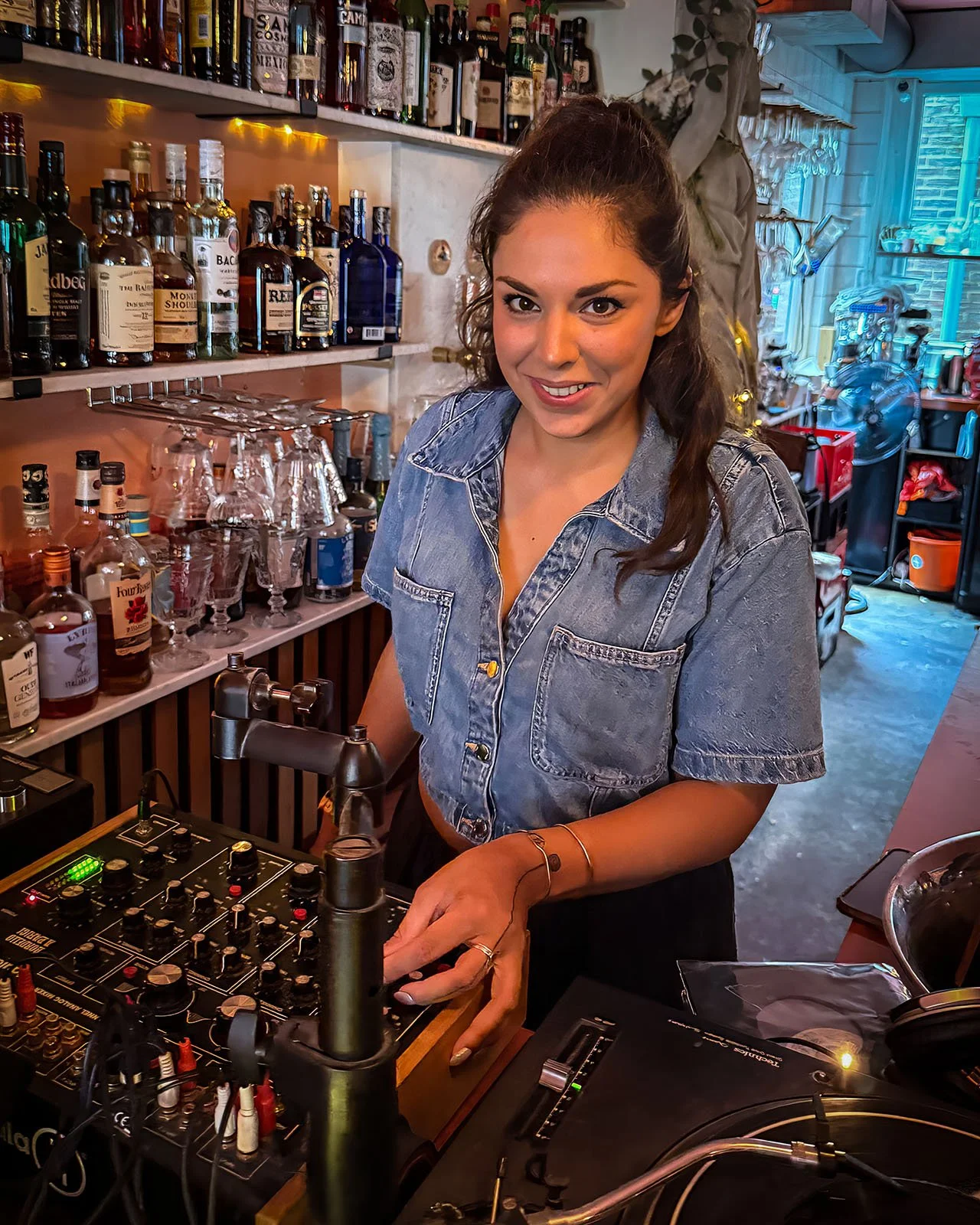
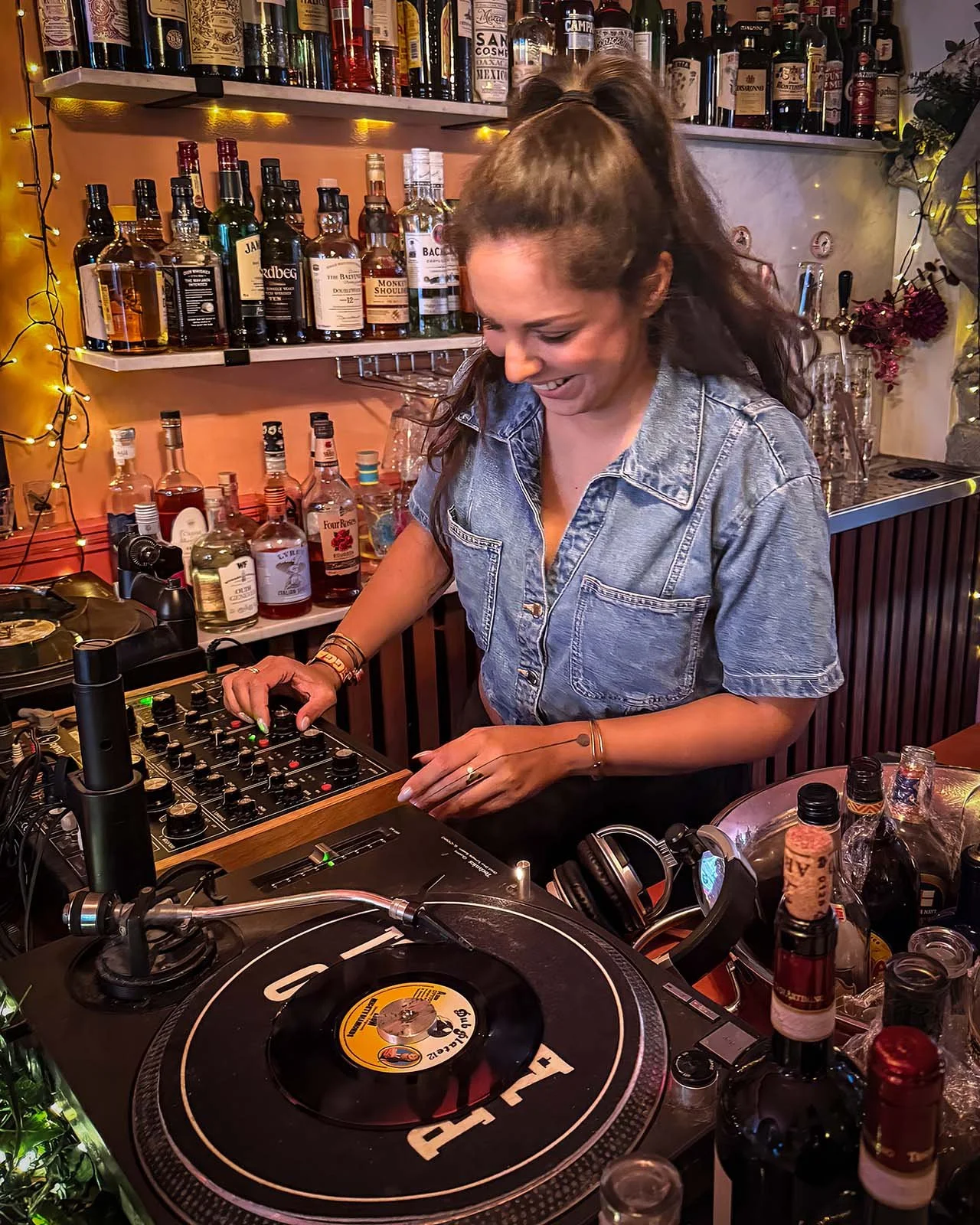
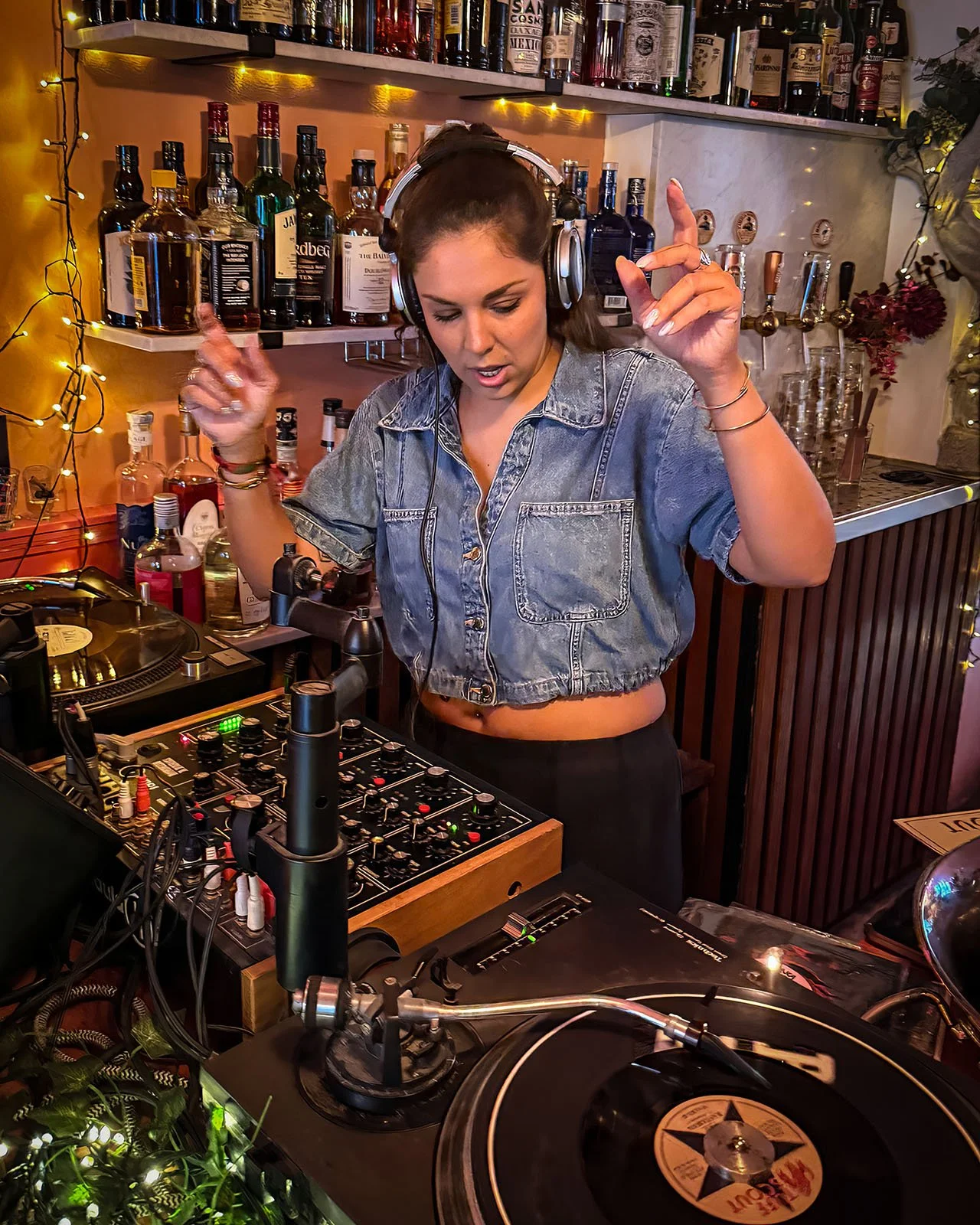
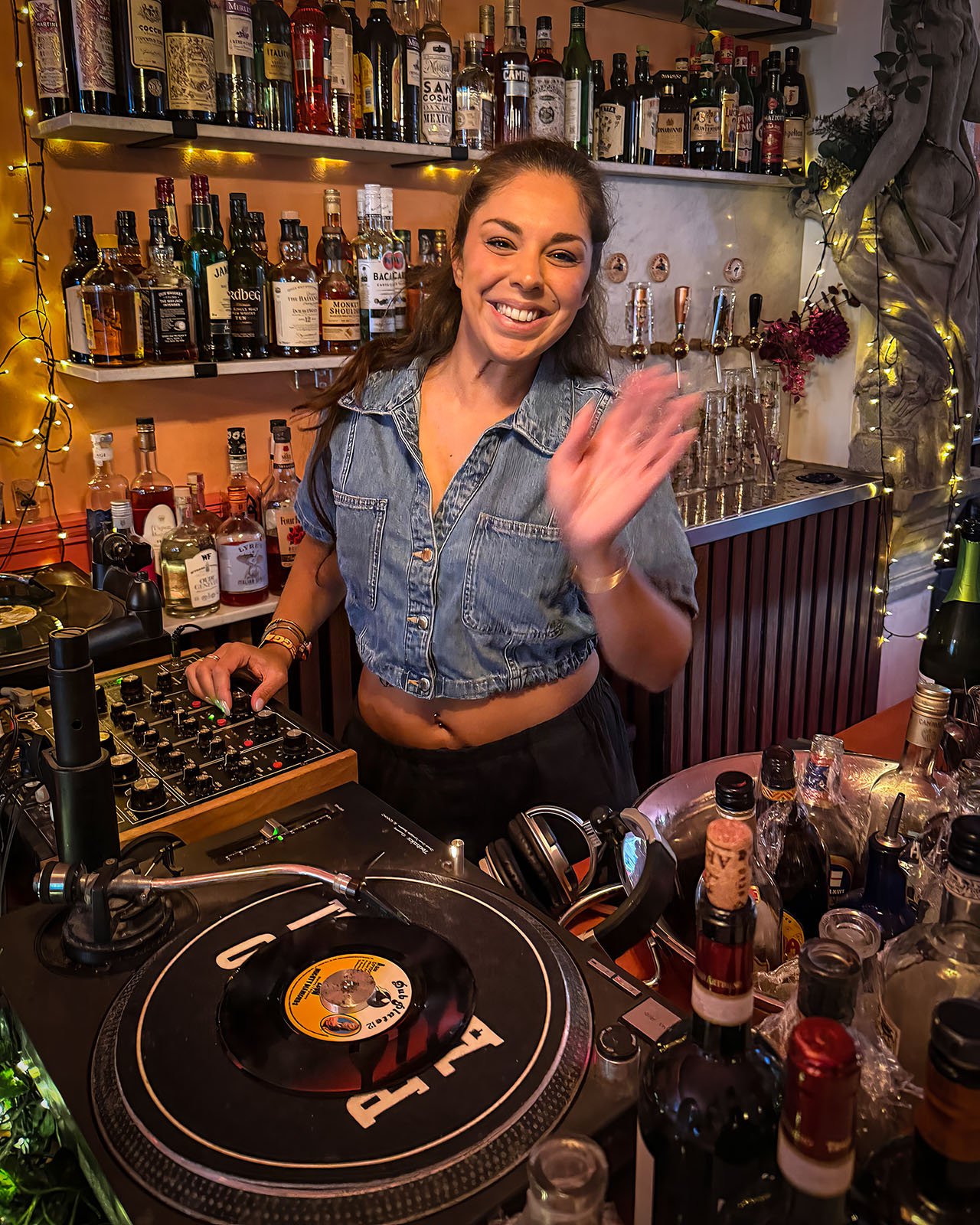
Selectress Khan made her DJ debut at Amsterdam Vinyl Club in July, playing delicious selection of reggae and dub at Bordello Aperitivo.
We spoke to her about discovering music in secret, Amsterdam’s sound-system community, documentary photography, and the messages of unity and hope at the heart of the music she plays.
Selectress Khan played at Amsterdam Vinyl Club on:
Meet Selectress Khan on Instagram, @atribecalledkhan
An interview with Selectress Khan
First, tell us a little about yourself?
My name is Amber Khan, which is where the name Selectress Khan comes from. I’m half Belgian and half Pakistani, and I was born in Belgium.
I wasn’t allowed to listen to music at home when I was growing up, so I always listened in secret. Somehow, hip-hop and reggae became my go-to music. I’m not even sure how I originally found them, but I was always fascinated by those records.
For a long time, I didn’t have the confidence to think I could do anything with music. Instead, I started collecting records, mainly reggae and dub.
How did you begin collecting vinyl?
My brother is six years older than me, and he had a lot of records. Seeing his collection helped me get into vinyl too.
I was already collecting before I moved to Amsterdam, but things really took off after I arrived here six years ago. I met a lot of people from the reggae scene, and that pulled me much deeper into the music and the culture surrounding it.
How did you move from collecting records to playing them for other people?
I go to a lot of reggae and dub sessions. There usually isn’t much mixing involved in dub music. Traditionally, you might have one turntable, and the focus is on showcasing your selection.
Deepak asked whether I wanted to play some records. I told him, “I’m not a DJ, I’m just a selector,” but he encouraged me to come along and try it. Now I really love doing it.
Where do you normally find your records?
I go to Platypus quite a lot, although not many record stores in Amsterdam have a large reggae and dub selection. Because of that, I do a lot of crate digging online.
Another super cool place is Earth Works Amsterdam in Noord. It's a studio, record shop and vinyl manufacturing place focused on dub and reggae. It's really cool that we have a space in Amsterdam where the scene comes together.
There are also often small vinyl markets at reggae and dub sessions, where people can buy records or swap them with each other. That’s another good way to discover music.
What are those reggae and dub sessions like?
They often take place a little outside the city because of the noise. People bring their own sound systems, which can be difficult to accommodate in central Amsterdam.
During the summer, there are lots of outdoor sessions and festivals. In winter, they tend to move inside. King Shiloh also hosts sessions at places such as Melkweg, and there have been events at SkateCafe. We travel to sessions around the Netherlands and Belgium too.
How large is your record collection now?
I left quite a lot of records at home in Belgium, so I don’t know the exact number. I’m not at the stage where I’m running out of space yet!
Some of my friends have entire rooms full of records, and I hope I might have something like that one day. For now, my records fit in a cabinet in my living room, with some displayed on the wall.
Your Amsterdam Vinyl Club appearance was your first DJ set. How did it feel?
It was amazing. I was so nervous beforehand because, as I said, reggae and dub selectors don’t necessarily make transitions between every record. I don’t really think of myself as a DJ, so I was worried that people might not understand what I was doing.
Once I started playing, though, I was just excited to share music that I love so much. Reggae and dub carry an important message, and I’m very happy to be one of the people helping to send that message out into the world.
What messages do you hope people hear in the records you play?
The most important message is unity: being together, being a good human being, and being pure in your intentions.
Reggae and dub music came from oppression, so they carry a lot of weight. At the same time, they also carry a lot of hope. Saying that they represent hope for a better future might sound like a cliché, but I think that's really what lies at the heart of reggae and dub.
Would you like to play more DJ sets?
Absolutely. I was very grateful to be given the opportunity and the space to do it. I don’t take that for granted.
I felt so good afterwards – if DJing always feels like that, I'd happily do it every weekend.
Are there any particular places where you'd love to play?
I love SkateCafe, Paradiso and Melkweg, but I also really enjoyed the intimacy of the AVC show. It felt cosy and welcoming, so I would honestly be happy to play anywhere that would have me.
I’d also love to do something on the radio. Radio gives you the opportunity to showcase a slightly different repertoire and go deeper into the music. That would be really exciting.
Music isn’t your only creative interest. Can you tell us about your photography?
Photography is something I’ve been doing since I was very young. I got my first camera when I was 14, and I mainly work in documentary photography.
I love looking at people and trying to convey what I see through my pictures. People can say so much through their faces, and I love the idea of capturing that in a single photograph and sharing it with somebody else.
I also take a lot of pictures when I travel. I’m inspired by how people in other countries live, what they find important, and how their experiences show in their expressions.
You also held your first exhibition recently. What was it about?
It's been a year of many firsts! My first exhibition documented a religious event in Sri Lanka.
It was very special to me because the event showed where people found their community. I could see that sense of belonging in their faces. I hoped that, by sharing the photographs, other people would be able to see some of what I'd seen in those moments.
Does community provide a connection between your photography and your music?
Definitely. I love people, and I think you can see that in my pictures.
Playing music gives me a similar feeling. Sharing a record and watching somebody react to it brings me so much joy. When someone hears the lyrics or understands what I’m trying to convey, and then comes over to ask what the record was, that makes me really happy.
Is there a particular record you’re searching for at the moment?
There’s one record I really want, ‘Reggae Vibes’ by Love Joys. It's been on my radar for a long time. I’ve found copies online, but they’re always very expensive.
I’m also looking for dubplates connected with Jah Shaka. They’re difficult to find, but they’re very important in the dub scene. Whenever I manage to find something like that, it feels very special.
Why is vinyl important to you?
Vinyl is particularly important within sound-system culture because it gives you a sound that you don’t always get from digital formats. Sound-system culture is all about the sound – the depth of the dub and the power of the bass.
Producers are creating that music for vinyl, and that’s where you can experience all the depth they put into the recording. For me, vinyl is the format that best conveys both the sound and the feeling of the music.
Right now, it’s vinyl for me, 100 per cent.