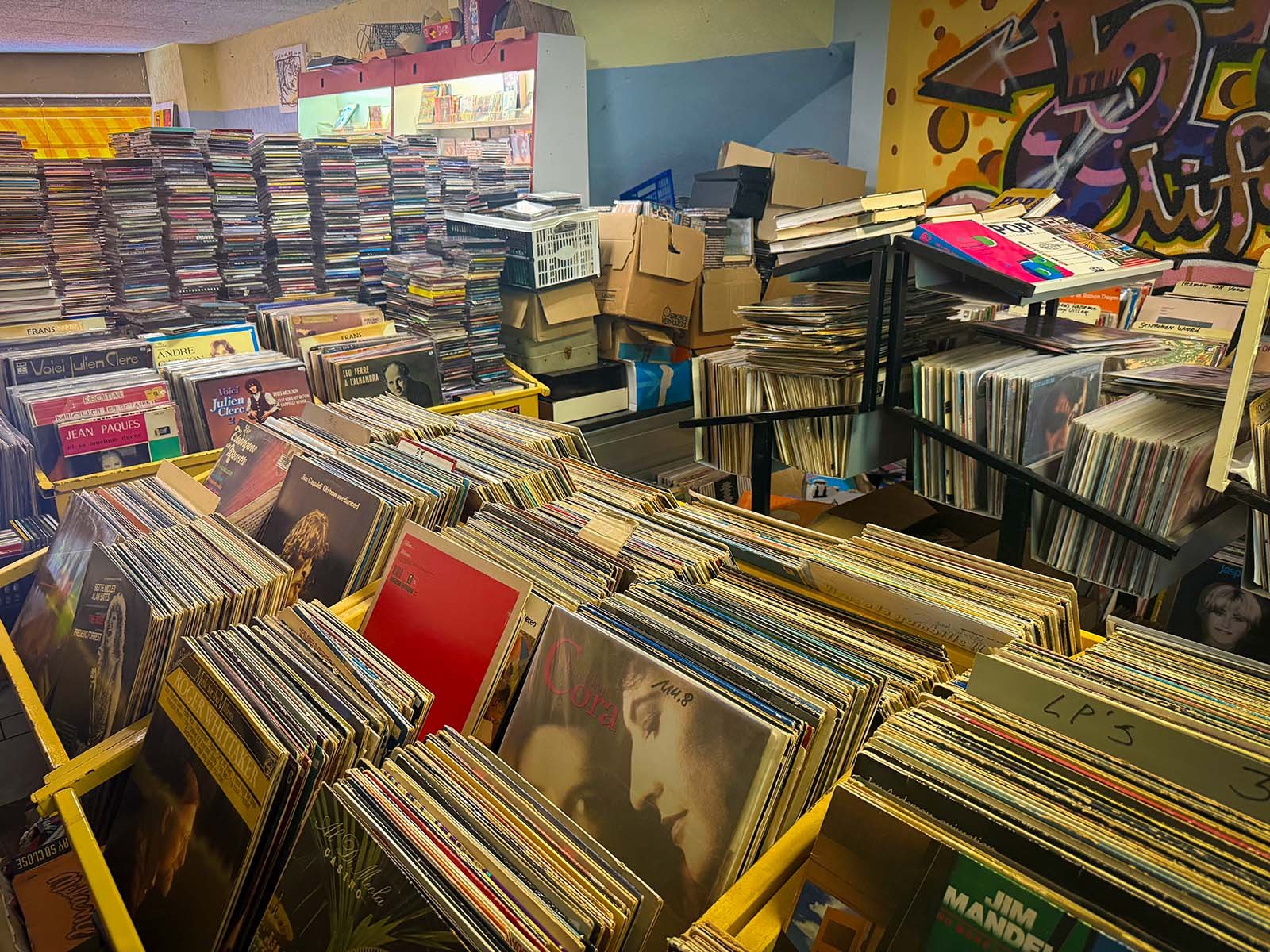
second life music
Second Life Music – one of the longest-running second-hand record stores in Amsterdam – has been a Prinsengracht institution for over two decades.
Owner Chris van Ling opened the store in November 2002, after years buying and selling records at the city's flea markets.
What began as a way of funding his own vinyl habit grew into a full-time job, and today the shop stocks everything from classic rock and jazz to reggae, French pop – all at affordable prices.
We sat down with Chris to talk about the future of second-hand vinyl stores, rare pressings and what makes a good record shop.
visit Second Life Music at Prinsengracht 366, 1016 JA Amsterdam. Open Tuesday to Saturday, 13:00 to 17:00. Closed Sunday and Monday
check out the Second Life Music website
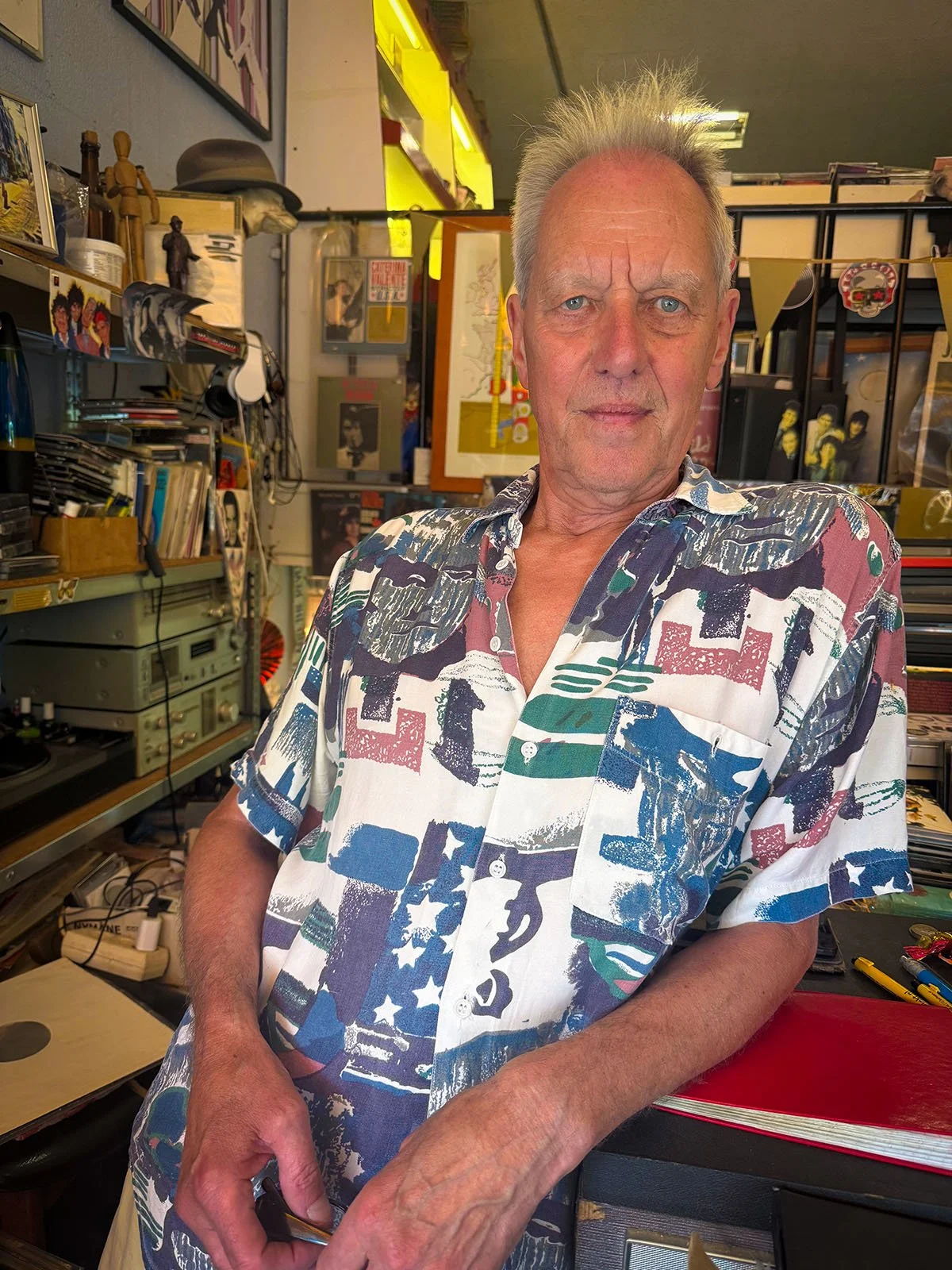
An interview with Chris van Ling, Second Life Music
I love hearing how people go from collecting records to running their own shop. How did it all begin for you?
I started collecting in the late 1980s.
In 1986 or 1987 I bought my first CD player, and thought, “If I'm getting one of these, the first thing I'll buy is a CD of a record I already love on vinyl.” So I picked ‘New Gold Dream’ by Simple Minds, which came out in 1982.
I put the CD on. Two songs in, I thought, “What is this?” It sounded cold and flat. No warmth at all.
So I put the LP back on, it sounded great, and that was that. I returned to vinyl and never really looked back.
The early 2000s was a brave time to open a record store…
It was. In the 1990s, everyone was throwing records away. During Queen's Day and at flea markets you could pick up huge numbers of records for almost nothing, because everyone wanted CDs instead.
I ended up with far more records than I needed, so I started selling the ones I didn't want at the markets. Eventually I found this shop and opened Second Life Music in November 2002.
People had only just started buying records again at that point, and they were mostly older collectors. Young people weren't interested yet. Now it's almost the opposite – young people buy plenty of vinyl, but mostly new pressings, not second-hand. The business has changed a lot.
What's changed the most?
Buying records has become much harder.
Years ago, whole collections would come straight into shops. Now people sell everything themselves, on Discogs or Facebook Marketplace. When someone dies, the family often goes through their collection first, because they know some of it might be valuable. So fewer collections ever reach a shop like mine.
You have to be lucky. Last year I found three excellent collections. This year, nothing really.
The internet doesn't help either. It's pushed prices up everywhere, and that's not good for the market. But most of my customers don't really buy online anyway. They just like coming into the shop – they like that more.
How would you describe the shop to someone who's never been in before?
I stock almost every genre except house. I used to sell house records, but there are already plenty of shops that specialise in that, so I let it go.
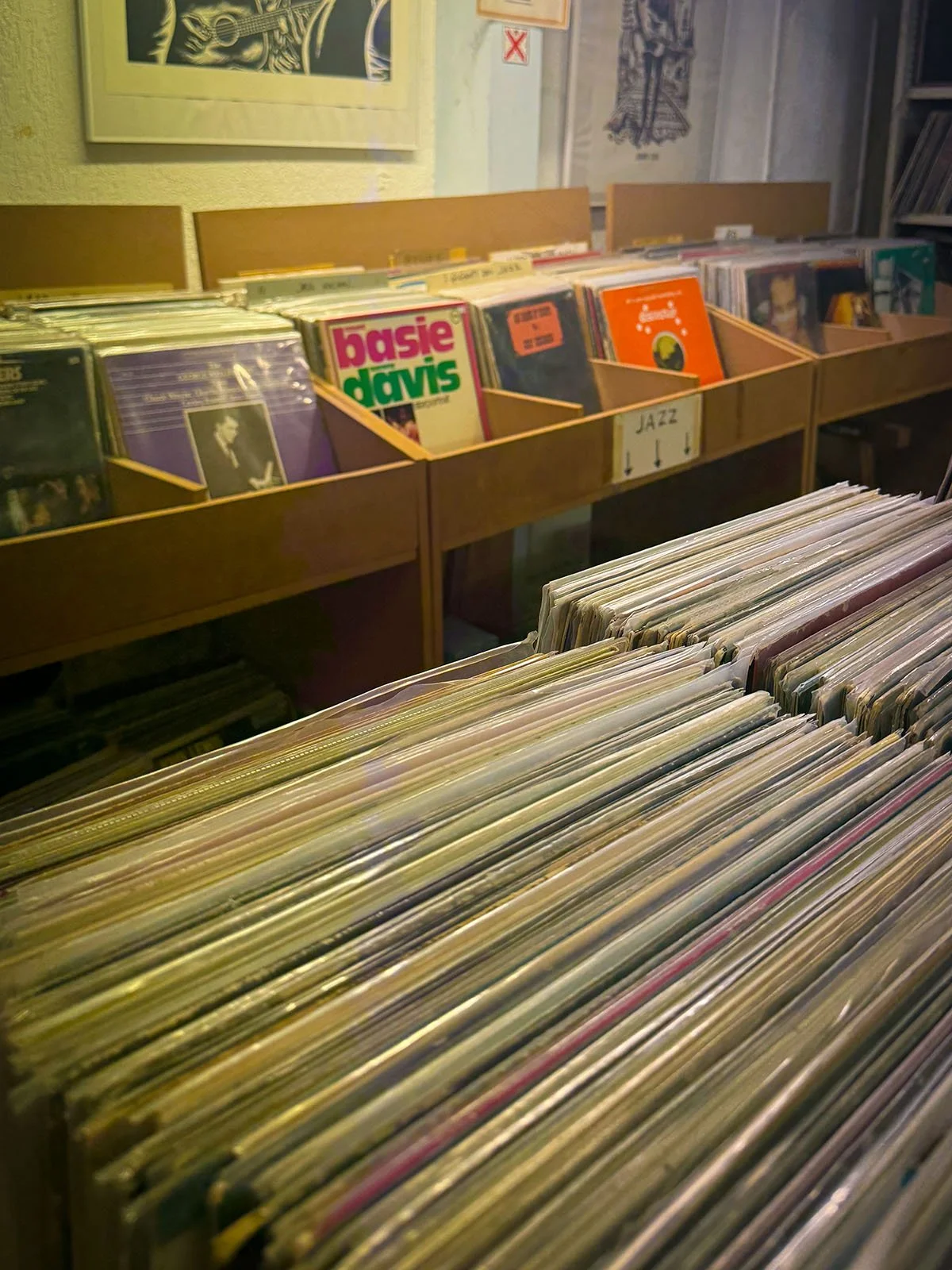
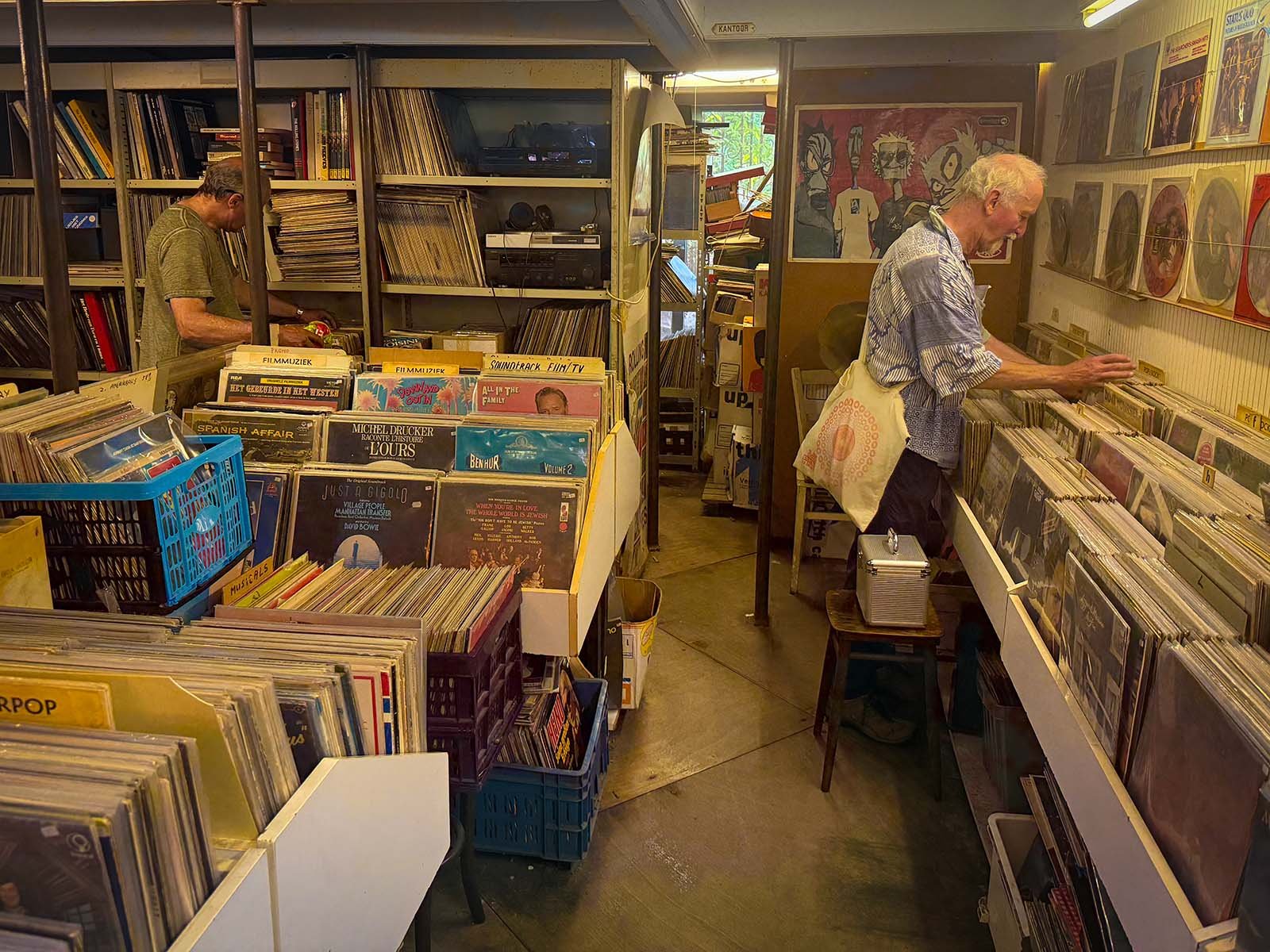
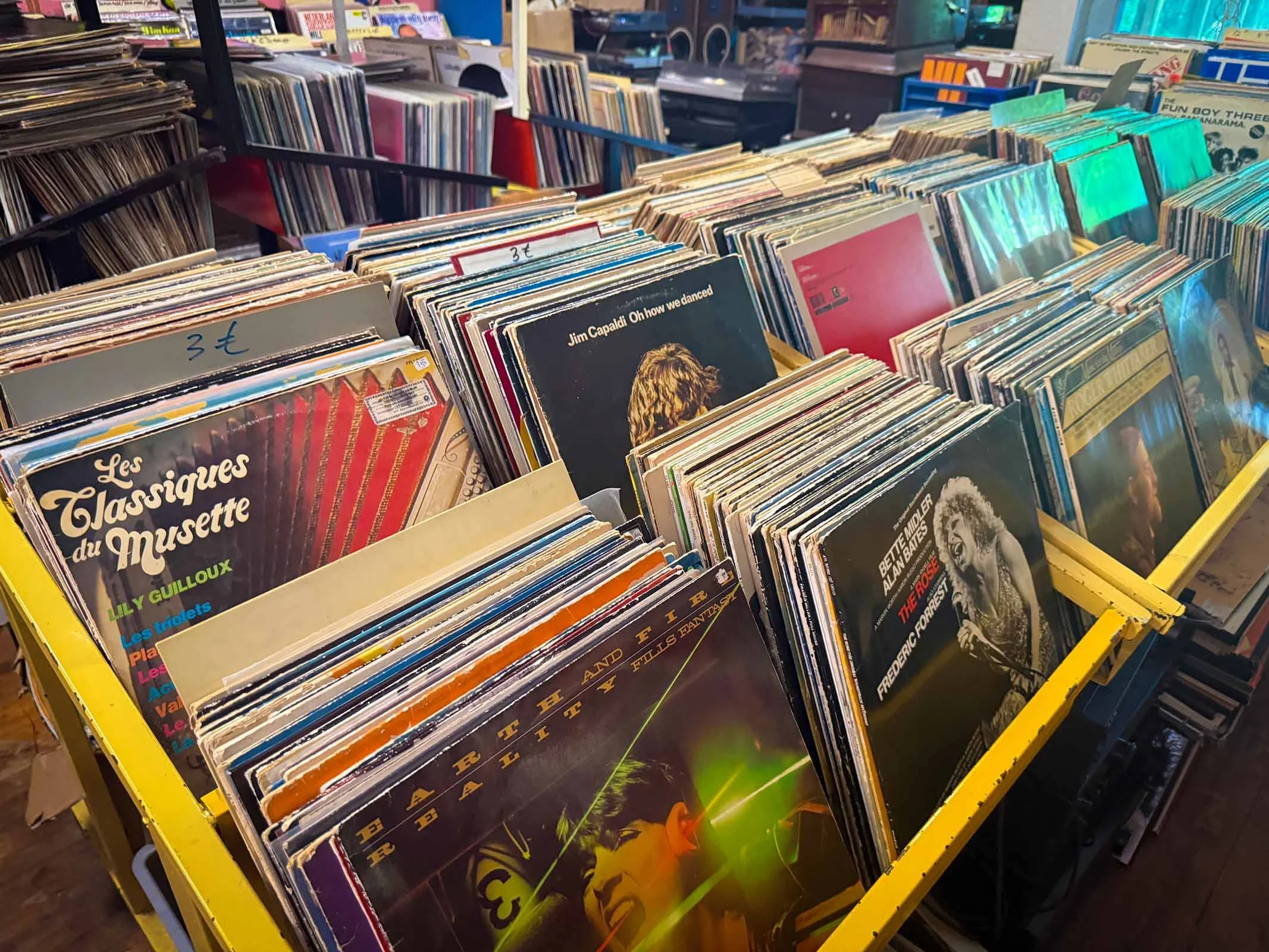
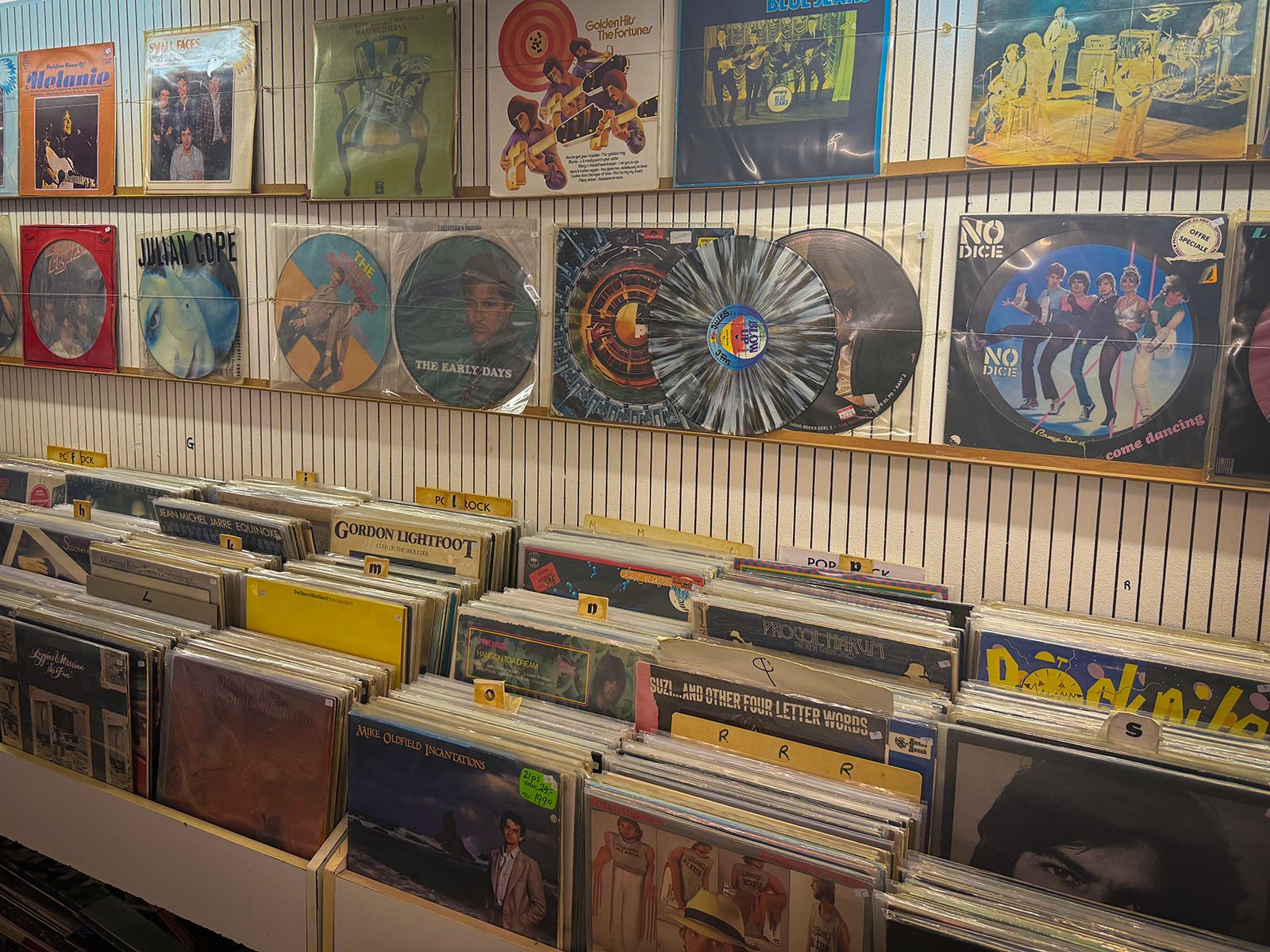
My own favourites are 1970s rock and jazz. Beyond that, in the shop you’ll find classical, French records, a bit of reggae, music from the 1960s, pop, rock, jazz, Dutch and soundtracks. Plus blues and soul – and more! All sorts.
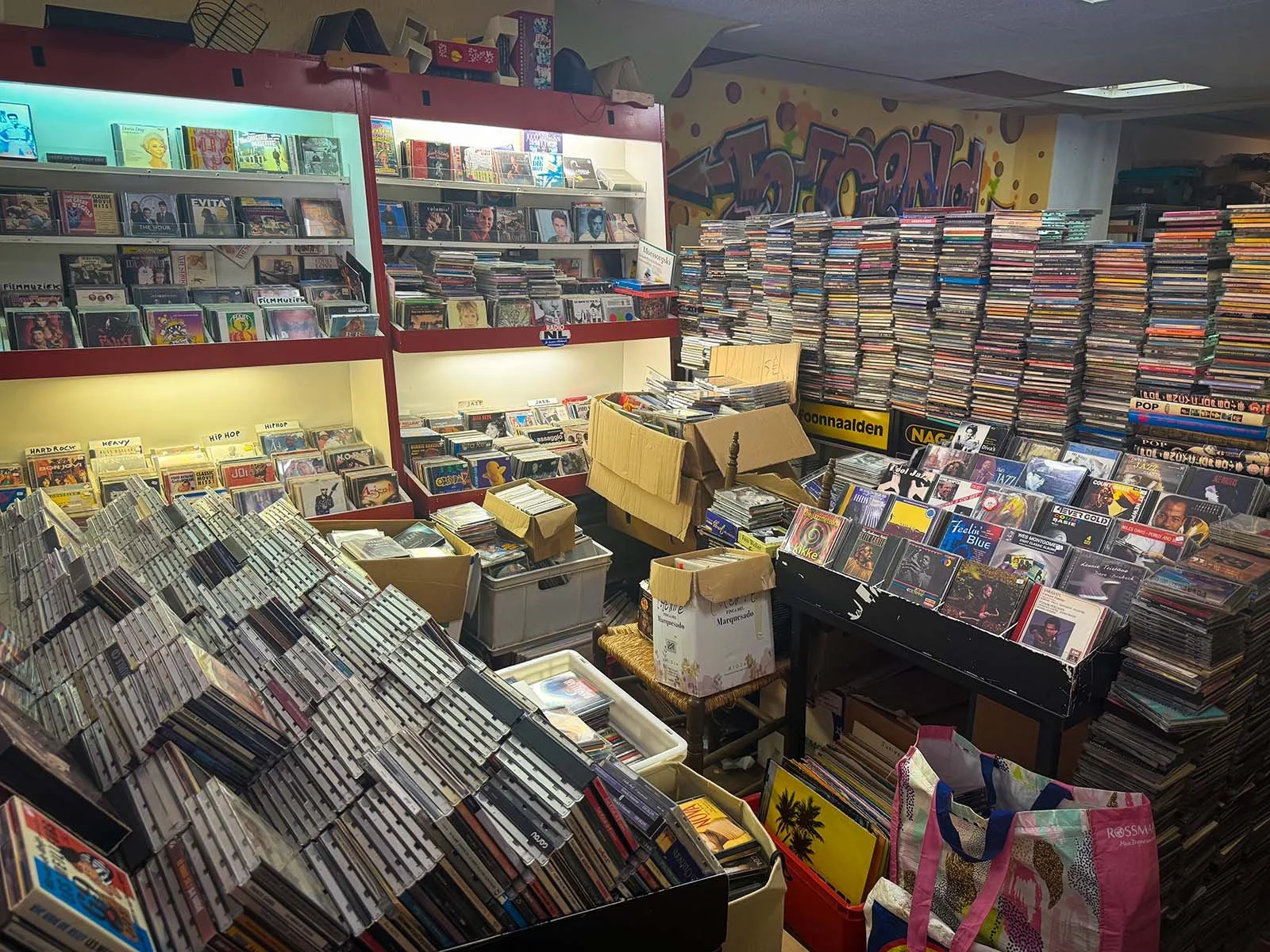
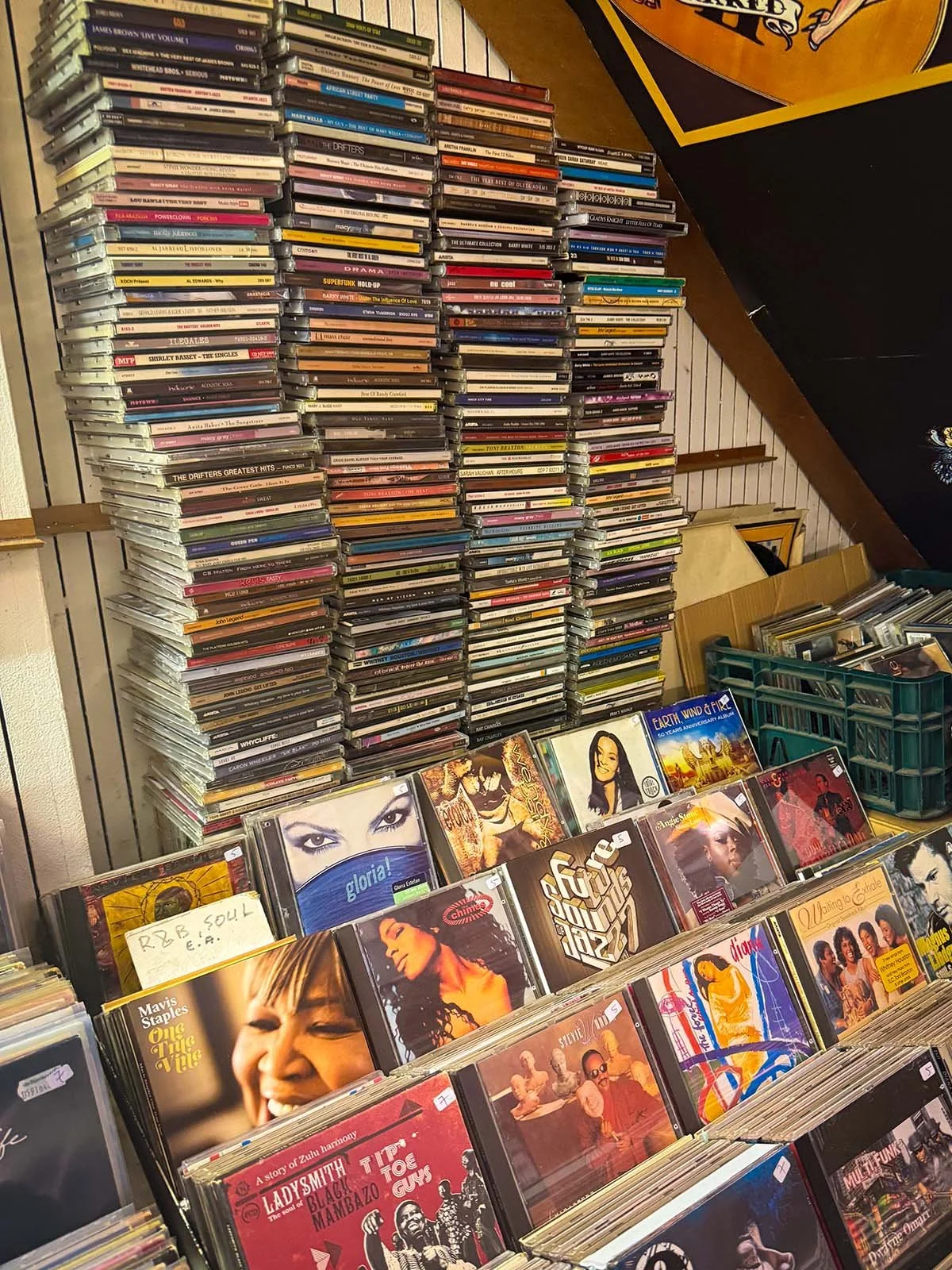
We also carry some second-hand CDs and turntables, but vinyl is still the majority of what goes out the door – maybe 80 or 90 per cent of what I sell.
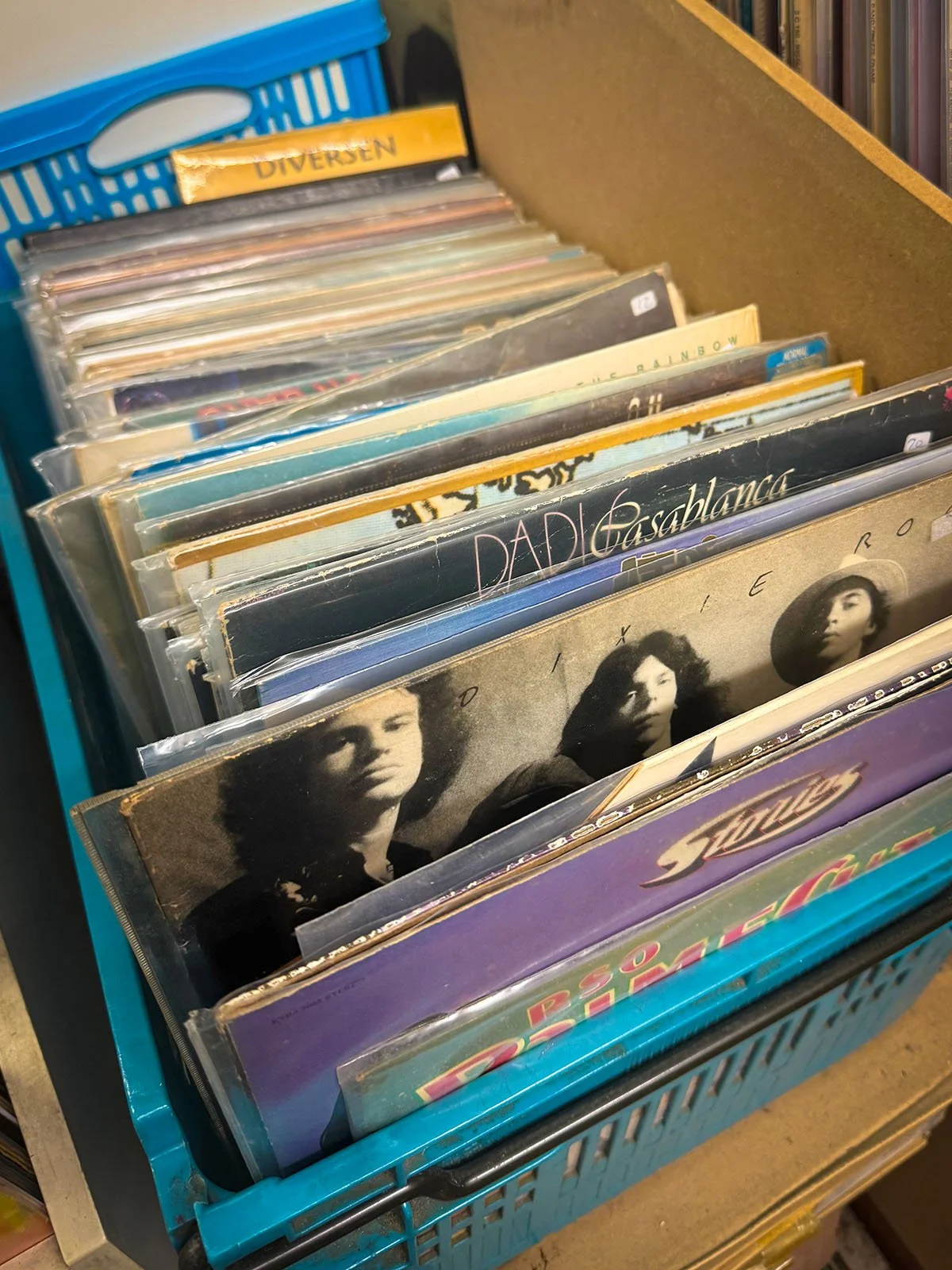
I'd call Second Life Music more of a junk shop than a neat record shop! Downstairs is fine, but upstairs it's a mess. Some people love that, though. They like digging around and finding things in unexpected places.
Most importantly, I try to keep everything affordable. I think I'm one of the cheapest record shops in Amsterdam.
Keeping prices low seems important to you.
Very important. Some shops specialise in rare records costing hundreds of euros. That's not really what I do. Most of my records are reasonably priced, because I want people to actually enjoy buying them. Customers tell me sometimes they'd have paid three times as much somewhere else.
If I've got a Neil Young record and I think €15 euros is a fair price, that's what I sell it for. I want people to leave happy, not feel like they've been stung.
Tell us about your customers.
They’re mostly men, if I'm honest. We've talked about it over the years and tried to figure out why, but we've never worked it out.
Lately, though, we're seeing a lot more young people coming into the store – both locals and tourists. That's a change from a few years ago.
Have buyers become more demanding about the condition of records?
Absolutely. People only want records in very good condition now, and the sleeves have to be good too. Everything in the shop is cleaned, protected in plastic and stored properly. People expect quality.
Are there certain artists that always sell straight away?
Queen. Always Queen. Fleetwood Mac, the Beatles, the Stones, the Doors, Pink Floyd are also very popular and easy to sell. I wish I had boxes full of them.
Michael Jackson too, and Sade. Put those out at the right price and they're usually gone the same day.
Has a genuinely rare record ever come through the shop?
Once, yes. I bought a collection from a family after the owner had died – a good collection, mostly 1960s and 1970s records. In among it was an English first pressing from 1968, ‘Odessey and Oracle’ by the Zombies, in mint condition.
A friend of mine who comes into the shop every week travels back and forth to England a lot. He saw the record and asked my price. I said €500. He bought it on the spot. I found out afterwards he sold it on for around €800.
I could have asked for more, but I don't really deal in records at that level. When I do price something at €400 or €500, it tends to just sit there, because that's not really the kind of customer who comes here. The most expensive thing in the shop is usually around €20.
Any other surprises over the years?
Years ago I bought a collection and, as I always do, checked inside every sleeve. Ten banknotes fell out. A hundred guilders each, a thousand guilders in total [around €450]. That was a nice surprise!
People hide things in books and record sleeves all the time, and sometimes nobody else even knows they're there.
Any memorable customers?
There’s one that stands out. A very big guy came in and went straight downstairs, digging through world music and film soundtracks. There was someone upstairs with him – a huge guy, covered in tattoos. I asked what was going on, if this was someone I should know. It turned out the first guy was a well-known English rapper, and the tattooed one was his bodyguard!
Where do you think second-hand shops will be in ten years?
I think there'll be more new vinyl, and fewer second-hand records available. The old records are getting harder to find, and a lot of classic albums are simply being reissued instead. That's probably the future.
Complete this sentence: A great record shop is…
A place with good records at fair prices.
The owner should be friendly, help people find what they're looking for, recommend things, and make everyone feel welcome. And, of course, the shop shouldn't be too messy. Well... I try.